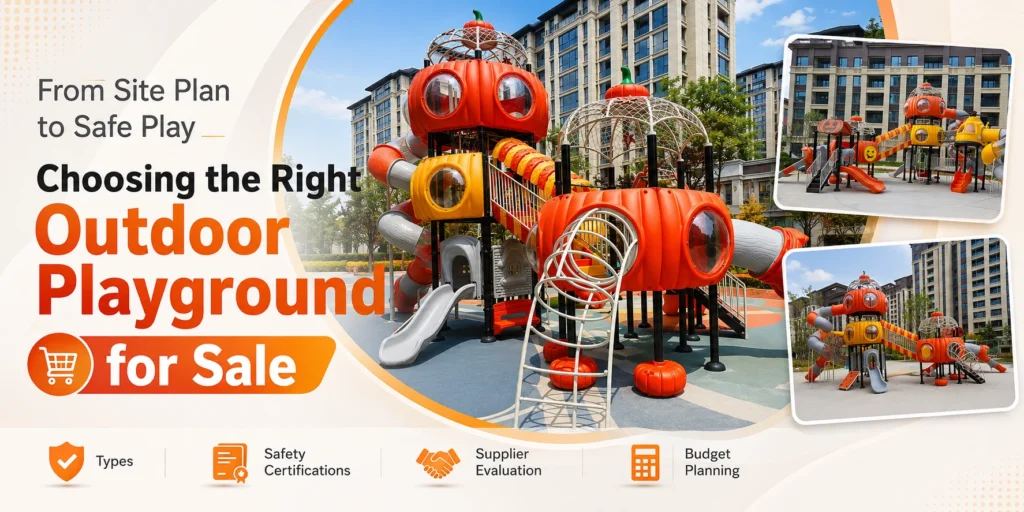
Sourcing an outdoor playground for sale for a school, park, or commercial venue often feels overwhelming. You need a system that survives heavy daily use, meets strict safety rules, and fits a tight budget. Many buyers discover too late that “budget-friendly” options lack proper engineering or fail inspection – a mistake that costs time and money.
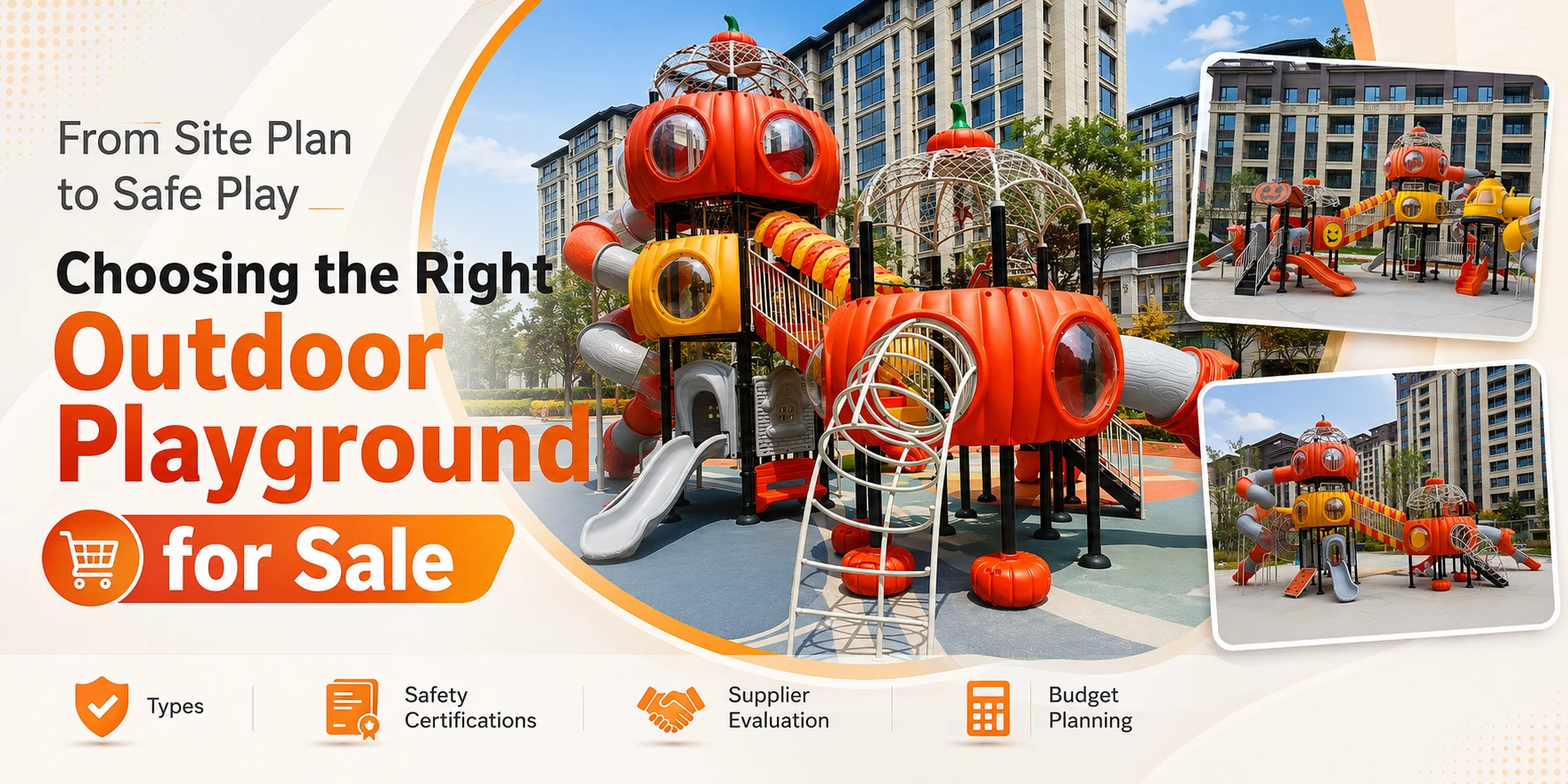
Commercial outdoor playgrounds for sale are not the same as residential swing sets. They are professionally engineered play systems built to handle dozens or even hundreds of children per day in high-traffic environments like schoolyards, community parks, and shopping centre family zones. Materials such as powder-coated steel, rotationally moulded polyethylene, and heavy-duty aluminium are standard. Each component must comply with safety standards like ASTM F1487 or EN 1176 to cover fall heights, spacing, and entrapment risks.
This guide walks you through the essential factors – product types, safety certifications, supplier evaluation, and budgeting – so you can choose a playground that lasts and passes all compliance checks. Whether you are a school principal, a park planner, or a contractor, the following sections will help you make a confident purchase decision.
Types of Commercial Outdoor Playgrounds for Schools and Parks
Most commercial outdoor playgrounds for sale fall into four main categories, each built for different budgets, age groups, and usage levels.
- Modular metal and polyethylene systems. These use galvanised steel posts with rotationally moulded PE decks and slides. They suit ages 2–12, handle heavy daily use, and last 15–20 years with basic maintenance. Many commercial playground suppliers, such as JQ Playground, offer modular ranges with extensive customisation options.
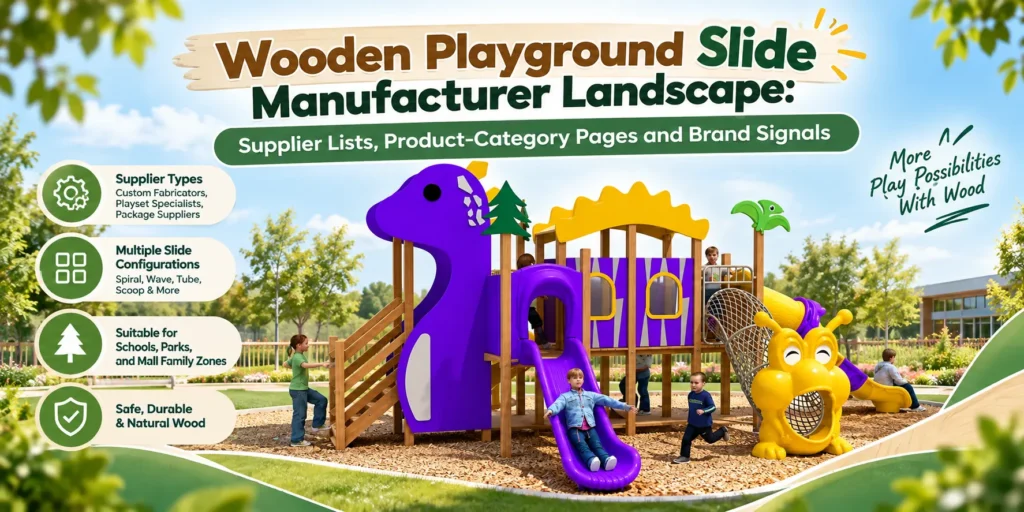
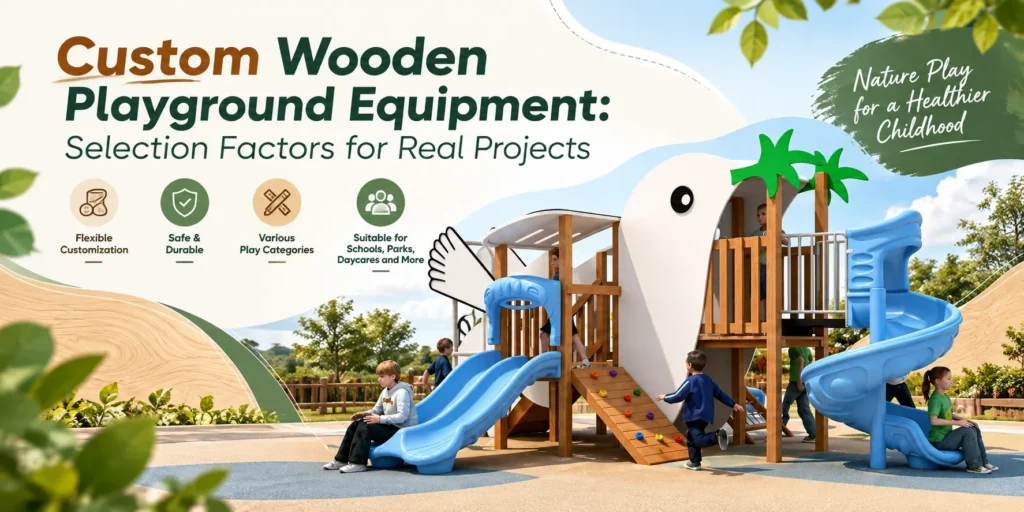
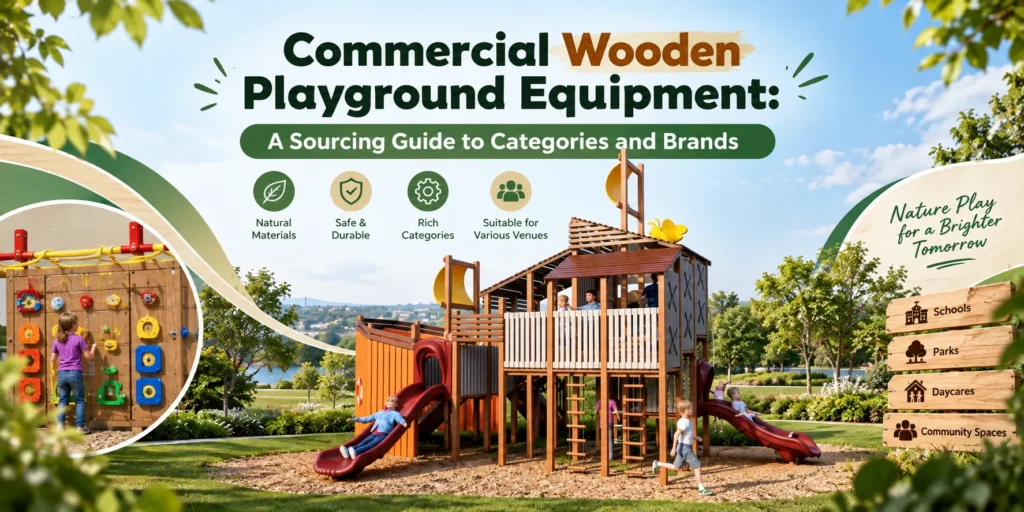
- Wooden play structures. Made from pressure-treated pine or cedar, these offer a natural aesthetic for parks or nature-focused schools. Age range is 3–12 years. They need annual sealing and part replacement after 10–15 years, so budget for ongoing upkeep.
- Inclusive and ADA-compliant units. Designed for children of all abilities, these include rubberised decks, transfer stations, wide ramps, and sensory play panels. Age range is 2–12 years. Surfacing is usually poured-in-place rubber to meet accessibility requirements.
- Themed play sets. Custom fibreglass or roto-moulded PE structures built around a narrative – pirate ships, castles, or treehouses. Best for ages 2–8 in high-traffic settings like shopping centres or paid-entry parks. Cost is typically 30–50% higher than standard modular systems.
Matching the type to your venue is crucial. Schools need age-separated zones so younger children are not mixing with older pupils. Parks require high-traffic resilience – modular metal units with heavy-duty powder coating can handle 500+ children per day. Once you have chosen a category, the next step is confirming the equipment meets recognised safety standards.
Key Safety Certifications to Verify Before Buying
Safety certifications are non-negotiable when purchasing outdoor playgrounds for schools or parks. They confirm the equipment meets recognised standards for fall height, spacing, and entrapment risks — and they protect your liability while unlocking grant funding opportunities.
The four key standards to check are:
- ASTM F1487 (USA) — Covers structural integrity, guardrail heights (minimum 635 mm for platforms above 508 mm), and containment barriers to prevent falls.
- CPSC guidelines (USA) — Focuses on surfacing impact attenuation (critical fall height up to 3048 mm) and spacing between moving parts to avoid pinch points.
- EN 1176 (Europe) — Specifies test methods for stability, entrapment prevention (no openings between 89–230 mm), and protective surfacing.
- CSA Z614 (Canada) — Addresses play equipment and surfacing, with clear rules on protrusion and entanglement hazards.
Red flags in supplier claims include: stating “meets safety standards” without naming a specific certification; providing a compliance letter from an unknown lab, not a third-party testing body; or claiming certification for a playground you cannot verify by serial number or model.
To verify, request the actual test report from a recognised laboratory (e.g., TÜV, SGS, Intertek) covering the specific model. Cross-check the report date — standards are updated every few years. A reliable supplier like JQ Playground, which holds certifications including EN1176, ASTM, and CPC, will share these documents without hesitation. If they hesitate, consider it a warning.
How to Evaluate Outdoor Playground Suppliers for Your Project
Once you have verified certification documents, the real work begins: selecting a supplier who can deliver on time, to spec, and within budget. Start by sending a detailed RFQ (request for quotation) to at least three shortlisted companies. Include your site dimensions, preferred materials (galvanised steel, rotomoulded PE, or recycled HDPE), target age group, and any custom colour or themed elements. The more detail you provide, the fewer costly change orders you’ll face later.
-
Compare product specifications side by side. Look beyond the brochure price. Ask for material thickness (e.g., steel wall thickness in mm), UV stabilisation data for plastic components, and warranty coverage for structural parts versus moving parts. A 10-year warranty on metal frames is common; anything shorter may signal lower-grade steel. Manufacturers with decades of experience, such as JQ Playground (founded in 1993), often provide longer warranties backed by stable production.
-
Assess lead times and shipping terms. A standard commercial outdoor playground can take 8–16 weeks from order to delivery. Ask suppliers what their current production queue looks like. If they quote four weeks, ask why — rushed manufacturing can affect quality control. Also clarify whether the price includes delivery to your site or just to the nearest port. A supplier with large production capacity, like JQ Playground’s 20+ production lines and 55 machines, can often meet tighter deadlines without sacrificing quality.
-
Request references and recent case studies. A trustworthy supplier should provide at least three references from similar projects — a school playground, a community park, or a mall family zone. Follow up with those buyers. Ask about installation experience, after-sales support, and whether the equipment arrived with all parts and instructions. JQ Playground, for instance, offers trial installation before shipping and can send engineers overseas for assembly support.
-
Check for project photos and CAD drawings. These are green signals. A supplier who shares detailed CAD layouts and high-resolution images of completed playgrounds demonstrates they are used to working with professional specifiers. Many experienced suppliers, including JQ Playground, have a dedicated design team that provides free CAD design based on your site measurements.
Red flags to watch for include prices that are 40% below the market average, refusal to share a test certificate, or vague answers about steel grade and colour fastness. If a supplier cannot explain how their equipment meets ASTM or EN 1176, walk away. Green signals, besides CAD drawings, include a clear returns policy, a published quality manual, and a willingness to video-call you through their factory floor.
Budgeting for a Commercial Outdoor Playground: Cost Factors and ROI
After you have shortlisted suppliers and verified their safety credentials, the next pivot is your budget. Costs vary widely, but understanding the key drivers before you sign an order prevents overspend.
Cost Factors at a Glance
- Size and play capacity – A small school playground (50–100 m²) typically runs $15,000–$30,000, while a large community park installation (200+ m²) can reach $50,000–$100,000+.
- Material choice – Galvanised steel with polyethylene panels costs less than premium rotomoulded plastic or stainless steel options. Wooden structures require higher ongoing maintenance.
- Customisation level – Off-the-shelf kits reduce cost; bespoke themes or branded colour schemes add 15–25%.
- Installation and ground prep – Site grading, drainage, and concrete footings add $5,000–$20,000 depending on soil conditions.
- Surfacing – Rubber wet-pour ($40–$60/m²) or bonded rubber mulch ($30–$45/m²) is essential for fall-height compliance. Loose-fill bark is cheaper but needs annual top-ups.
Return on Investment in Real Terms
A well-placed commercial playground increases foot traffic by 25–40% for shopping centres or family venues, according to case studies from park operators. For schools, a safe playground equipment investment correlates with a 15–20% rise in student enrolment over two years, as parents prioritise outdoor play facilities. The long-term value is best measured by reduced injury liability (ASTM-compliant equipment cuts incident reports by over 80%) and lower replacement frequency — a quality metal system lasts 15–20 years with basic upkeep. Working with an experienced manufacturer like JQ Playground, which has exported over 2,000 containers annually, ensures you get durable equipment that maximises your investment.
About JQ Playground – kidsplaygroundsupplier.com
JQ Playground (Wenzhou Jiqi Amusement Equipment Co., Ltd.) is a children’s playground equipment manufacturer founded in 1993. The company provides design, customization, large-scale manufacturing, sales, installation guidance, and after-sales support for outdoor playgrounds, indoor playgrounds, soft play, water playgrounds, PE board playgrounds, kindergarten furniture, outdoor fitness equipment, pet playgrounds, and playground facilities. Approved company facts include 180+ employees, a large Wenzhou production base, 20+ production lines, 55 production machines, ISO/BSCI/EN1176/EN71/ASTM/CPC/CPSIC certification references, 100+ patents, free design support, OEM/ODM capability, trial installation before shipping, export experience, and one-year quality warranty.