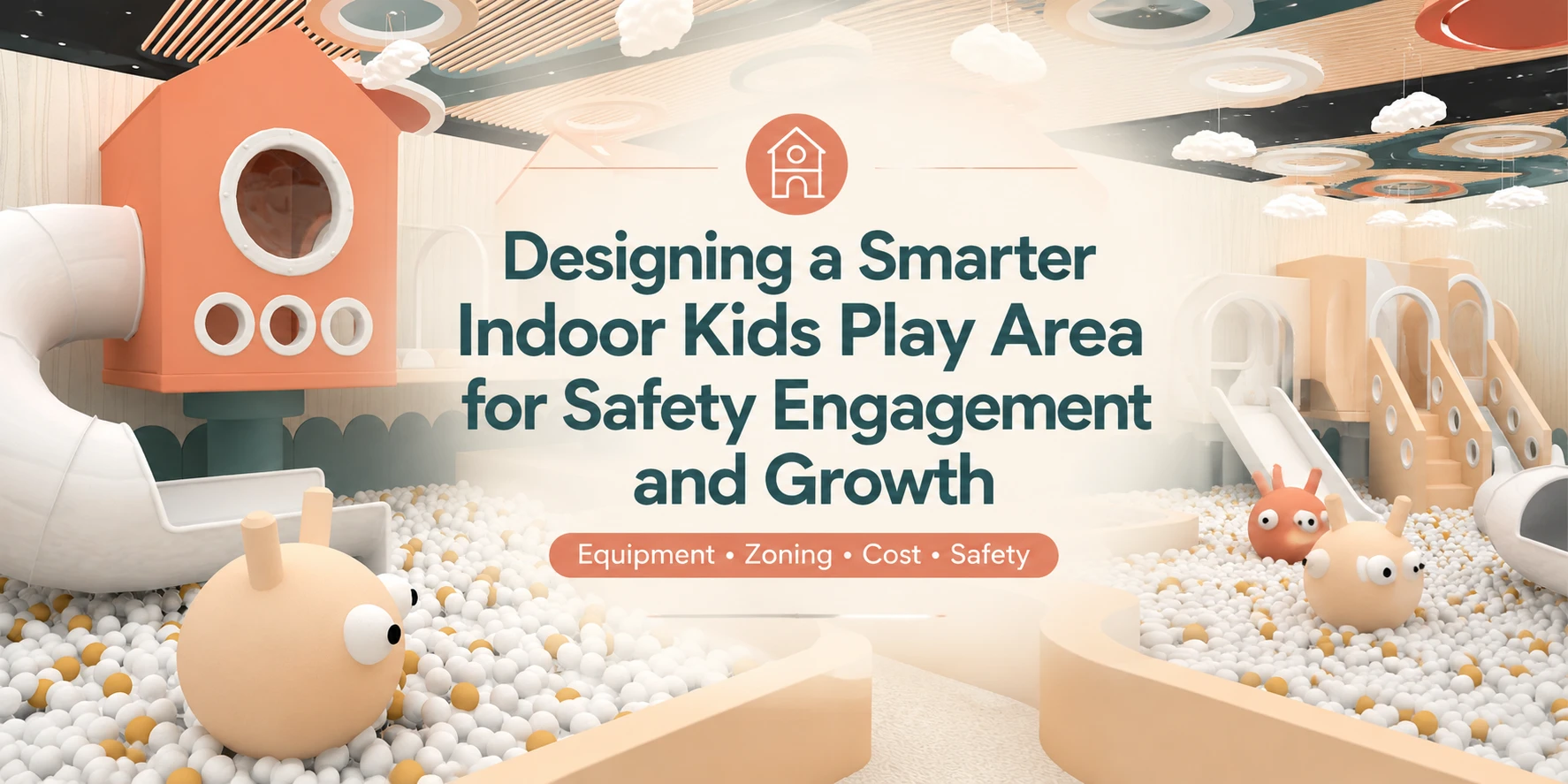
When you source equipment for an indoor kids play area, every decision balances attraction value, floor plan efficiency, and safety. An indoor kids play area is a climate-controlled space with age-appropriate playground structures, soft play elements, and activity zones designed for children, which means flooring, sight lines, and structure types all need early planning. This guide covers equipment essentials, age zoning, cost drivers, and layout safety so you can brief a kids playground supplier with a clear specification.
Essential Attractions for an Indoor Kids Play Area
Successful indoor play areas balance active equipment with calmer corners, so guests stay engaged longer. The core attractions below show typical age ranges and floor footprints.
- Ball pits: ages 1-5, roughly 20-40 m²
- Slides: all ages; compact 2 m units or multi-lane towers from 30-50 m²
- Climbing towers: ages 4-12, allow 50-80 m² including fall zones
- Trampolines: ages 5-10, around 15-30 m² per pit
- Soft play modules: under-4s, crawl-safe blocks over 20-40 m²
- Obstacle courses: ages 6-12, 60-100 m² for a full run
- Imaginative play structures: ages 2-8, 15-35 m² for houses or shopfronts
Adventure centres and play cafes commonly pair climbing frames with quieter role-play corners. Mixing equipment types raises dwell time because children switch between physical and social play instead of tiring quickly.
Zoning by Age: Designing for Toddlers, Preschoolers, and Big Kids
Plan the floor plate around three distinct zones before ordering equipment. This split is standard in indoor playground design because it matches each structure to a child’s motor skill level.
- Reserve the lowest-noise zone for toddlers. Fit it with crawl-safe soft play, low slides, and padded shapes for children under three.
- Create a middle zone for preschoolers with small climbers, ball pits, and stepping pods sized for 3–5 year olds.
- Give big kids multi-level structures, taller slides, and obstacle runs that test balance, grip, and coordination.
Clear sight lines from seating areas let caregivers supervise every zone without entering the play floor. Family play centres observed in SERP evidence consistently apply these splits, grouping equipment by ability rather than theme.
What Drives the Cost of an Indoor Play Area Installation?
Your budget splits across five main components:
- Equipment package – soft play modules, climbing frames, slides and interactive elements form the largest line item.
- Safety surfacing and flooring – impact-absorbing mats, foam tiles or poured rubber under and around structures.
- Installation labour – site assembly, anchoring and safety testing by experienced fitters.
- Layout design services – space planning, traffic flow and age zoning drawings tailored to your floor plan.
- Ongoing maintenance supplies – replacement foam, cleaning products and spare fasteners.
Total cost scales with square footage, ceiling height and the complexity of custom themes. A basic soft play zone for a play cafe sits at the lower end, since cafes invest more in furniture than large structures. A multi-level family entertainment centre setup sits higher, reflecting the cost of tall climbing frames and interactive features. For accurate budgeting, ask a kids indoor playground supplier to quote against your specific footprint.
Layout and Safety Factors to Address Before Sourcing Equipment
Before you commit to an equipment package for your indoor kids play area, map the room and its safety zones on paper. Work through this checklist with your contractor:
- Fall zones around elevated platforms, sized to the platform height
- Minimum clearance between structures, allowing two children to pass safely
- Emergency access paths that stay clear of equipment footprints
- Fire exit visibility, with no structure blocking signs or routes
- Non-slip flooring across high-traffic areas and slide exits
- Rounded edges on all equipment, including frames and platform rims
SERP-listed venues consistently market secure, clean environments as a headline feature, so safety design directly shapes guest confidence. Plan zoning, sight lines, and equipment spacing together before ordering packages—retrofitting a layout after delivery costs far more than adjusting a floor plan first.
About JQ Playground – kidsplaygroundsupplier.com
JQ Playground (Wenzhou Jiqi Amusement Equipment Co., Ltd.) is a children’s playground equipment manufacturer founded in 1993. The company provides design, customization, large-scale manufacturing, sales, installation guidance, and after-sales support for outdoor playgrounds, indoor playgrounds, soft play, water playgrounds, PE board playgrounds, kindergarten furniture, outdoor fitness equipment, pet playgrounds, and playground facilities. Approved company facts include 180+ employees, a large Wenzhou production base, 20+ production lines, 55 production machines, ISO/BSCI/EN1176/EN71/ASTM/CPC/CPSIC certification references, 100+ patents, free design support, OEM/ODM capability, trial installation before shipping, export experience, and one-year quality warranty.