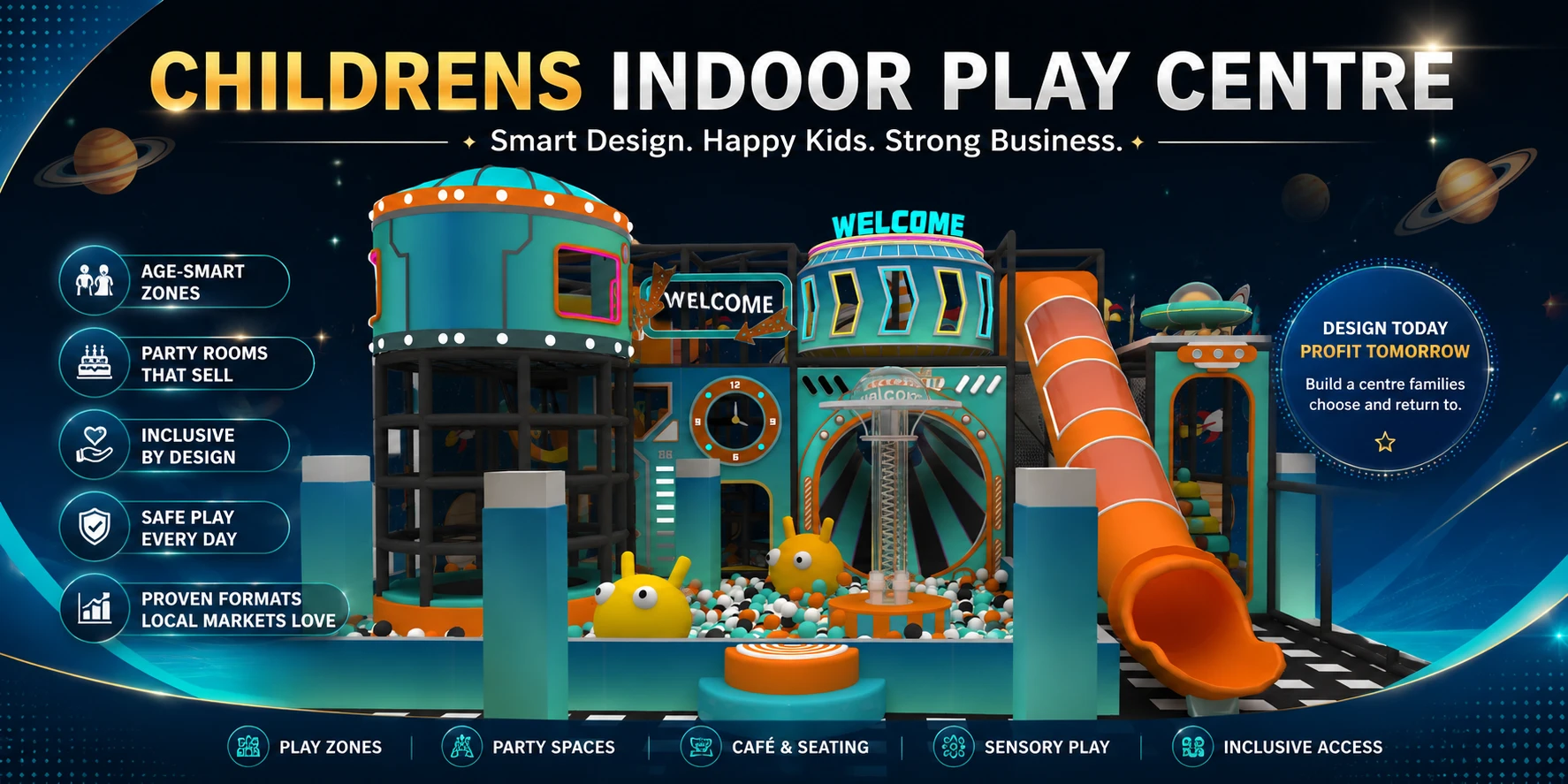
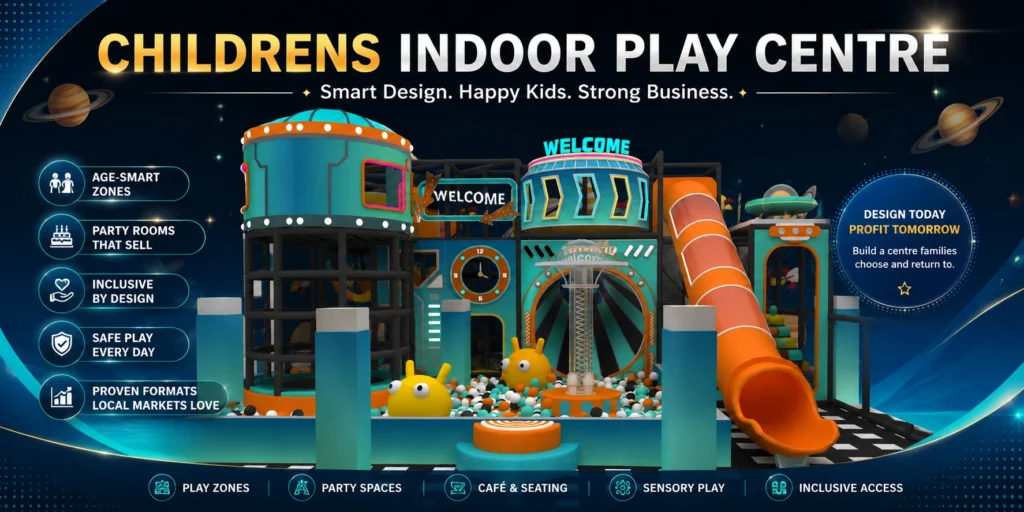
For childrens indoor play centre, buyers need guidance that matches the exact query intent before comparing suppliers, specifications, or RFQ details.
Planning a children’s indoor play centre means weighing which facility formats, play zones, and revenue spaces are already proven in your local market before you commission any equipment. Directory listings and venue sites show what local families actually use and pay for.
A children’s indoor play centre is an indoor facility designed for children aged 0–12, combining age-specific play structures, safety surfacing, and seating or party areas.
This article explores play centre formats, age zoning, party packages, and inclusive design to help you brief a supplier with confidence.
Play Centre Formats That Appear Across Local Directories and Venue Sites
Local directories for Colorado, Denver, and Indianapolis show that “children’s indoor play centre” listings split into six proven formats, each serving a different age range and catchment need. Before commissioning blueprints, audit two or three regional directories to see which model already dominates your target postcode; that gap analysis should steer your equipment brief.
- Children’s museums — ages 1–10; interactive exhibits, role-play sets, open-plan circulation.
- Soft-play centres (Little Monkey Bizness style) — ages 0–6; ball pits, foam climbs, slides, padded decking.
- Boutique play museums (Play Street Museum style) — ages 1–8; miniature town sets, kitchen and shop props.
- Community-centre and church playgrounds — ages 0–10; value-priced frames, open sessions, party hire.
- Play cafes — ages 0–5; compact soft-play beside food service seating.
- Indoor sandbox venues — ages 1–10; kinetic sand tables, sensory tools, easy-clean bays.
Whichever format you choose, the directory evidence points to age zoning as the next critical decision.
Age-Targeted Zones Shape Equipment Decisions for Indoor Play Centres
Age zoning drives every equipment choice in the venues you see on directory listings. Operators split play floors into three bands: toddlers from 6 months to 3 years, transitional users aged 2–6, and older children up to pre-teen years. Each band needs its own entry point and clear sightlines from parent seating.
- 6 months–2 years: low-level crawl platforms, foam shapes and shallow ball pools; allocate 20–30% of the play floor.
- 2–6 years: compact slides, tube crawls, ball pits and soft obstacles that build balance and spatial awareness; roughly 40% of space.
- 5–12 years: climbing frames, rope bridges and obstacle runs that reward coordination; the remaining 30–40%.
Matching structures to motor-skill milestones reduces crowding and encourages social play between similar-age children. A logical split also frees clear floor area for party rooms and cafe seating later, so treat zoning as the first floor-plan decision, not an afterthought.
Party Rooms and Flexible Attraction Space Drive Indoor Play Centre Revenue
The leading venues in any local market treat parties as their steady revenue anchor. A typical package bundles a private room, themed tableware, a dedicated host, and food choices such as pizza, fruit platters, and cake service. Because parents book these slots weekly, the format justifies setting aside 15–20% of your total floor area for party rooms.
Position those rooms next to the cafe or waiting area. Staff can then serve food and manage comings and goings without crossing busy play zones. On a 500 m² floor, that allocation gives you roughly 75–100 m² of party-ready space, so check your floor plan against that ratio before you commit equipment layouts.
Flexible attractions extend the earning life of the venue. Competitor sites renew footfall by adding a separate toddler zone, ninja course, or sensory room, giving repeat visitors a fresh reason to book and keeping party calendars full between weekend peaks.
Inclusive play has become a filter parents apply before booking. Terra Play Center, a venue that ranks prominently across local directories, fronts its listing with an inclusion statement — clear evidence that accessible design influences visibility. Ignore wheelchair access or sensory needs when commissioning equipment, and you lose families who actively search for venues that advertise them.
Specify these features in the bid pack:
- Wheelchair-accessible ramps and platforms connecting ground and upper decks without crowding play routes.
- Sensory-reduced lighting and audio: dimmable LEDs, acoustic baffles, and no noisy overhead announcements.
- A dedicated quiet zone with soft seating where overstimulated children can reset.
- Padded flooring across climbing and fall zones; this also cushions children with coordination or sensory integration needs.
- Swings, balance beams, and tactile panels that support proprioceptive input.
Inclusive fixtures strengthen two business outcomes. They lift directory appeal — many top-rated centres showcase inclusion in listings — and they support grant eligibility for community operators, as accessibility funding often names inclusive provision a core criterion.
About JQ Playground – kidsplaygroundsupplier.com
JQ Playground (Wenzhou Jiqi Amusement Equipment Co., Ltd.) is a children’s playground equipment manufacturer founded in 1993. The company provides design, customization, large-scale manufacturing, sales, installation guidance, and after-sales support for outdoor playgrounds, indoor playgrounds, soft play, water playgrounds, PE board playgrounds, kindergarten furniture, outdoor fitness equipment, pet playgrounds, and playground facilities. Approved company facts include 180+ employees, a large Wenzhou production base, 20+ production lines, 55 production machines, ISO/BSCI/EN1176/EN71/ASTM/CPC/CPSIC certification references, 100+ patents, free design support, OEM/ODM capability, trial installation before shipping, export experience, and one-year quality warranty.