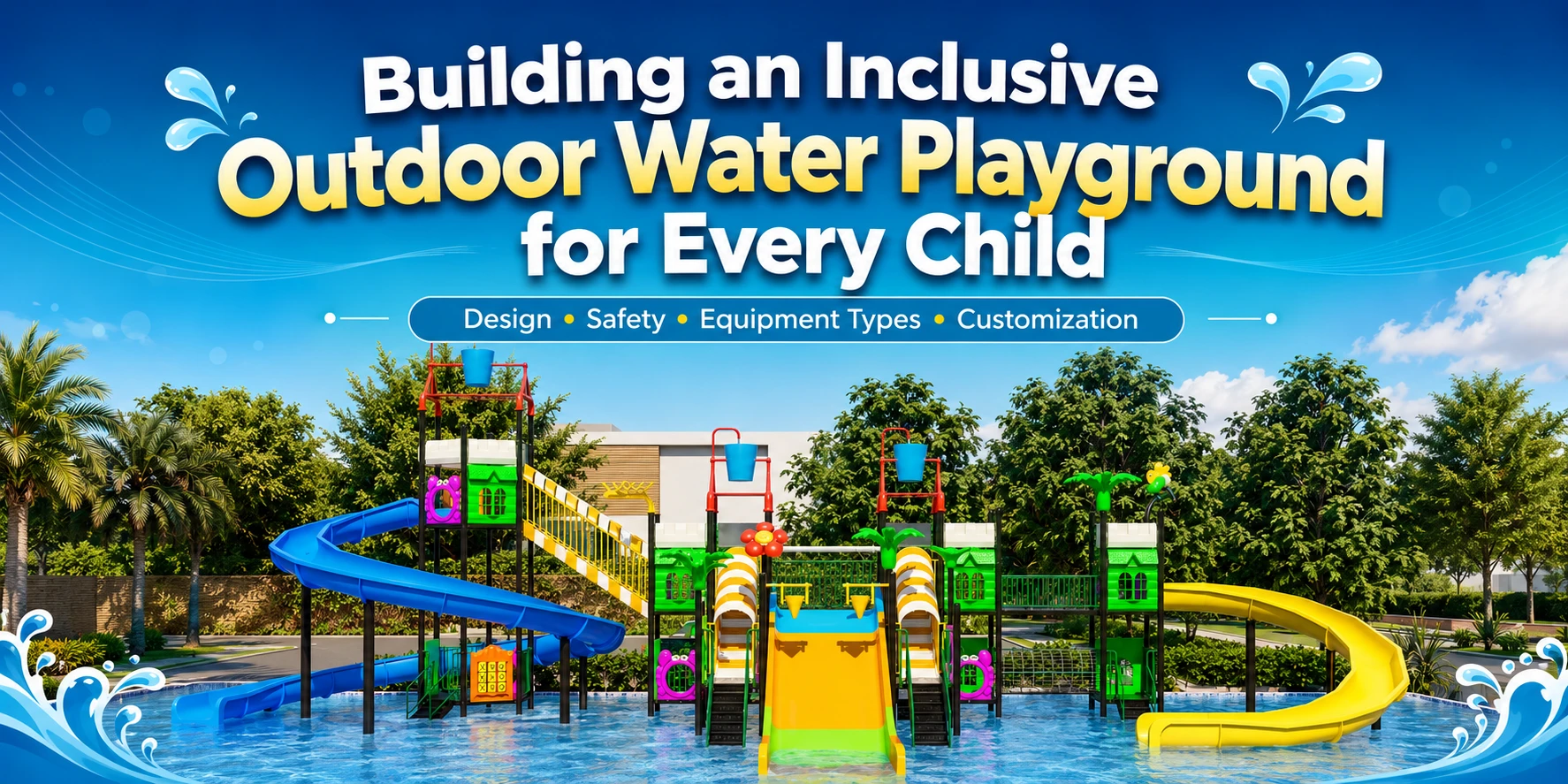
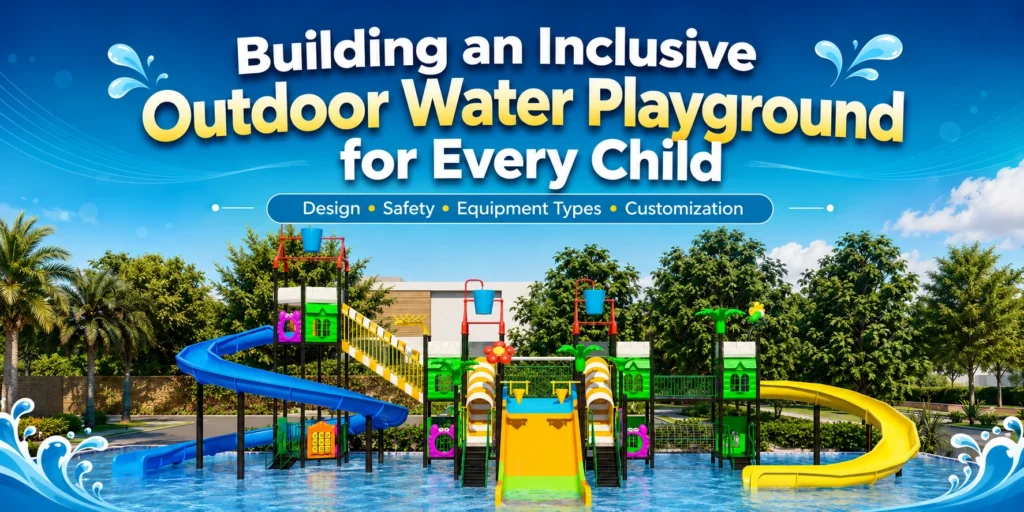
Planning an outdoor water playground for a school, park, or commercial venue often starts with a single question: how do you create a play experience that welcomes every child, regardless of ability? The demand for inclusive, multi-sensory water play has grown sharply—over 60% of new UK public playgrounds now include water features, according to landscape architects. An outdoor water playground is a commercial-grade installation with zero-depth entry, interactive spray elements, and durable materials such as UV-resistant HDPE and stainless steel, designed for year-round use. Buyers must evaluate types, features, safety compliance, and customisation options to choose the right system for their space and budget. Partnering with an experienced manufacturer like JQ Playground (Wenzhou Jiqi Amusement Equipment Co., Ltd.), founded in 1993 with over 30 years of industry experience, can streamline the process from initial design to final installation.
Key Features of Commercial Outdoor Water Playgrounds
Beyond the fundamental construction materials noted in the introduction, commercial outdoor water playgrounds incorporate several systems that determine long-term value. B2B buyers should prioritise the following features during specification:
- UV-resistant HDPE and stainless steel construction – Marine-grade 304 stainless steel and rotationally moulded HDPE withstand constant sun exposure, chemical treatment, and heavy use. Expected service life: 10–15 years with only periodic sealing or fastener checks. JQ Playground uses these materials in its outdoor water playground products, ensuring durability.
- Recirculation and filtration systems – NSF-50-certified units filter and reuse water, cutting consumption by up to 70% compared to drain-to-waste designs. This reduces both water bills and sewer discharge costs.
- Touchless activation – Push-button or motion-sensor controls eliminate physical contact with valves, lowering maintenance callouts and improving hygiene in high-traffic school and park settings.
- ADA-accessible zero-depth entry – Slip-resistant surfaces and splash zones at grade allow children using mobility aids or with limited balance to join play without barriers. Most jurisdictions require this for public funding eligibility.
- Modular, bolt‑together design – Sections can be added, moved, or replaced without demolishing the entire pad. This allows phased installation within tight budgets or future expansion as attendance grows.
For school playgrounds and community water play areas, these features directly reduce operating costs, simplify daily cleaning routines, and maintain a safe, inclusive environment under high visitor loads.
What Are the Main Types of Water Play Equipment for Parks and Schools?
Choosing the right water play equipment starts with understanding the main types available. Each category suits different venue sizes, age groups, and budget ranges.
Spray pads (also called splash pads) use ground-level jets, misters, and dump buckets with zero-depth entry. They are the most common choice for school playgrounds and smaller community parks. Low-height spray features (under 1.2 metres) suit children aged 2–8 and eliminate fall risks from elevated platforms. A typical spray pad needs 50–150 square metres of flat, drained surface.
Splash structures combine elevated slides, climbing elements, and large tipping buckets. They require a larger footprint (150–300 square metres) and a deeper fall zone with impact-absorbing surfacing. These work well in destination parks or large school campuses serving ages 4–12. The tipping bucket alone can anchor a play zone, but adds water volume management costs.
Themed interactive panels include water wheels, rain curtains, and spinning discs mounted on low walls or pedestals. They fit tight spaces such as kindergarten playgrounds, sheltered corners, or indoor-outdoor transition areas. Panels encourage cooperative play and fine motor exploration for toddlers and early primary children. A single panel occupies roughly 2–3 square metres.
Integrated play islands combine water and dry play elements into one cohesive structure. Slides, climbing nets, and spray features sit on a common deck with water channels and sensory tables. These are typical in large community playgrounds, zoos, or waterpark transition zones. They serve mixed age groups (2–12) and require a minimum site area of 200 square metres plus separate circulation paths.
For a kindergarten playground, spray pads and themed panels are the most practical options due to low height and minimal supervision demands. A community playground may benefit from splash structures or integrated islands for higher play value and longer dwell times.
Safety and Compliance Considerations for Water Playground Installations
Water playground safety rests on four overlapping frameworks: equipment standards, surface requirements, water quality codes, and accessibility regulations. Overlooking any one can delay opening or void insurance.
In the United States, ASTM F2376 sets the design, installation, and maintenance standard for commercial water play equipment. In Europe, EN 1176 covers general playground safety, with additional water-specific clauses. A quick comparison helps you assess which applies:
| Standard | Region | Primary focus |
|---|---|---|
| ASTM F2376 | USA | Water play equipment – spray features, structural loads, patron safety |
| EN 1176 | Europe | General playground equipment – impact zones, entrapment, heights |
| NSF 50 | USA | Recirculated water filtration and disinfection |
| EN 1177 | Europe | Impact-absorbing playground surfacing |
Fall zones require certified cushioning. For water playgrounds, slip-resistant surfaces must meet ADA surface-grip standards (US) or equivalent local codes. Even if you source from a mall kids playground supplier, verify the specified fall height matches the surface’s tested impact absorption. Drainage design is equally critical – standing water creates slip hazards and bacterial growth. A 1–2% slope toward grated drains is the typical specification.
Water quality is governed by local health codes and, for recirculating systems, NSF 50 certification. Filtration and chlorination levels must be tested weekly. Many outdoor spray pads typically need a turnover of 2–4 minutes. JQ Playground’s equipment adheres to ASTM, EN1176, and other relevant certifications, with an 8-point QC system ensuring compliance throughout production.
Address these compliance points during the bid phase, not after installation. A checklist of standards, surfacing, drainage, and water treatment ensures your project meets code on opening day.
Customization and Installation Options for Outdoor Water Play Areas
Once compliance is confirmed, the next step is tailoring the design and planning the installation. Customisation options extend beyond colour palettes to full thematic branding — you can match civic park colours, incorporate school mascots, or recreate a nautical, jungle, or space theme using custom-moulded panels and printed graphic decals. Most suppliers offer a standard colour chart with 15–20 UV-stable shades, plus the ability to reproduce specific Pantone codes for corporate or municipal branding. For integrated dry playgrounds, you can design transition zones where spray elements and swings coexist, using the same powder-coat finishes and slide colours for visual cohesion.
Installation typically follows a four-stage process:
- Site preparation — grading the area to a 1–2% slope for drainage, running a dedicated 25–40 mm water supply line, and trenching for 240 V electrical feeds to pump and control units.
- Foundation anchoring — concrete footings (300–400 mm deep) for permanent installations, or modular rubber base mats for above-ground units that can be relocated. Above-ground options reduce excavation costs by 30–40% but require more frequent re-leveling.
- Equipment assembly and plumbing — connecting spray nozzles, timing valves, and recirculation pumps, followed by pressure testing at 8–10 bar.
- Surfacing and final inspection — installing slip-resistant wet-pour rubber or textured tiles, then confirming fall height compliance (typically 600–900 mm for zero-depth zones).
Decision factors usually come down to three variables:
- Budget — above-ground systems start at £25,000–£40,000; concrete-anchored custom builds range £60,000–£120,000 for medium-sized parks.
- Available space — spray pads require 9–14 m² per interactive element; full splash structures need 25–40 m² minimum.
- Target age group — low-height spray loops suit 2–6 year-olds; multi-level structures with slides engage 5–12 year-olds.
A typical installation takes 4–8 weeks from groundbreak to handover, including a 10–14 day curing period for concrete footings. If you are sourcing from a kids outdoor playground supplier, ask about phased installation—starting with a core splash pad and adding themed features in year two spreads capital expenditure without delaying opening day. JQ Playground offers free CAD-based design services, trial installation before shipping, and can send engineers for on-site assembly support, with a one-year warranty on all products. Always confirm that the equipment meets safe kids playground equipment standards for slip resistance and water quality before signing off.
About JQ Playground – kidsplaygroundsupplier.com
JQ Playground (Wenzhou Jiqi Amusement Equipment Co., Ltd.) is a children’s playground equipment manufacturer founded in 1993. The company provides design, customization, large-scale manufacturing, sales, installation guidance, and after-sales support for outdoor playgrounds, indoor playgrounds, soft play, water playgrounds, PE board playgrounds, kindergarten furniture, outdoor fitness equipment, pet playgrounds, and playground facilities. Approved company facts include 180+ employees, a large Wenzhou production base, 20+ production lines, 55 production machines, ISO/BSCI/EN1176/EN71/ASTM/CPC/CPSIC certification references, 100+ patents, free design support, OEM/ODM capability, trial installation before shipping, export experience, and one-year quality warranty.